Case 01
The Passenger
He thought he was leaving. But some doors remain open long after the key turns.
In The Passenger, Marie de Caba recounts a case in which an ordinary return to an apartment becomes the beginning of something impossible: the sound of chains, a presence that follows, and a car accident that should have ended in tragedy.
At first, the presence seems frightening. Only later does Marie understand that fear was not the meaning of the case.
The Spiritist Doctrine Behind This Case
According to Allan Kardec’s Spiritist doctrine, the phenomena described in The Passenger can be understood through several principles found in the foundational works of Spiritism.
Explore the Spiritist principles behind Marie’s cases.
This explanation does not replace the mystery of the case. It gives the case a doctrinal frame: a way to understand why a frightening manifestation may, in fact, carry a protective intention.
1. Physical and Visual Manifestations
The sound of chains and the apparition of a human figure belong to the field of spontaneous mediumistic manifestations.
In Spiritist doctrine, spirits may produce physical effects in order to call attention, awaken perception, or signal an unseen presence. Sounds, knocks, movements, and other physical disturbances are described in Kardec’s works as forms of manifestation between the spiritual and material worlds.
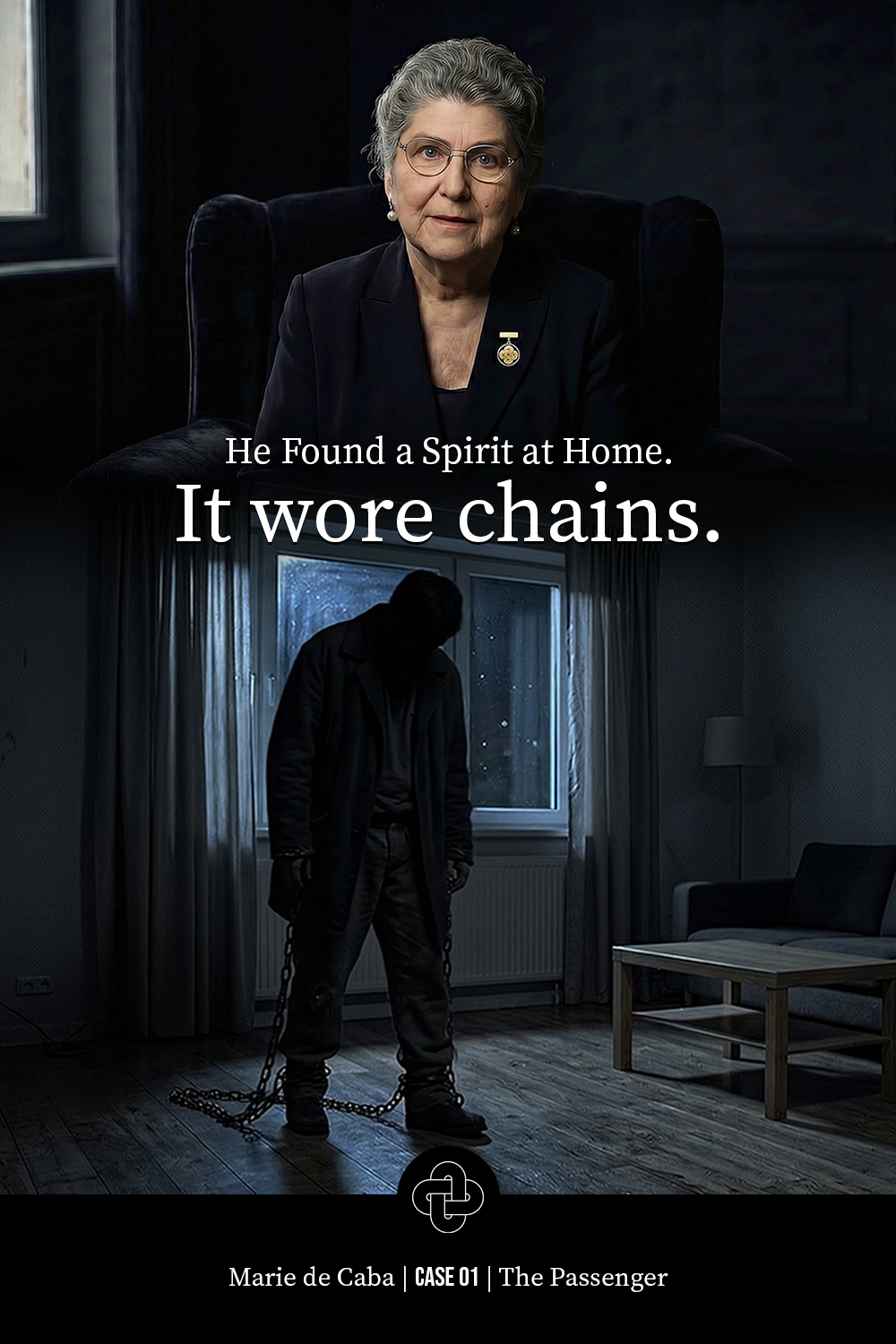
The chains heard in the case function first as an auditory manifestation. They are not merely a frightening sound. They are a signal.
The figure itself can be understood through the Spiritist concept of the perispirit, the subtle fluidic envelope through which a spirit may become temporarily perceptible. According to Kardecian doctrine, apparitions occur when a spirit modifies the properties of its perispirit in such a way that it can be seen, either vaguely or with a more defined human form.
The disturbing appearance of the spirit does not necessarily mean that the spirit is evil. This is essential to the case.
The chains may symbolize suffering, bondage, unfinished moral pain, or the condition in which the spirit still presents itself. In Spiritism, the exterior form of a manifestation must never be judged alone. The true nature of a spirit is revealed by intention, action, and moral effect.
In The Passenger, the appearance is frightening. The intention is protective.
2. The Presence and Movement of Spirits
The case also illustrates the Spiritist understanding that spirits are not limited by physical space in the same way as embodied human beings.
According to Kardec’s doctrine, spirits can move with the rapidity of thought and may remain near individuals, places, or situations without being perceived by ordinary senses. The invisible presence of spirits around the living is one of the recurring themes in The Spirits’ Book.
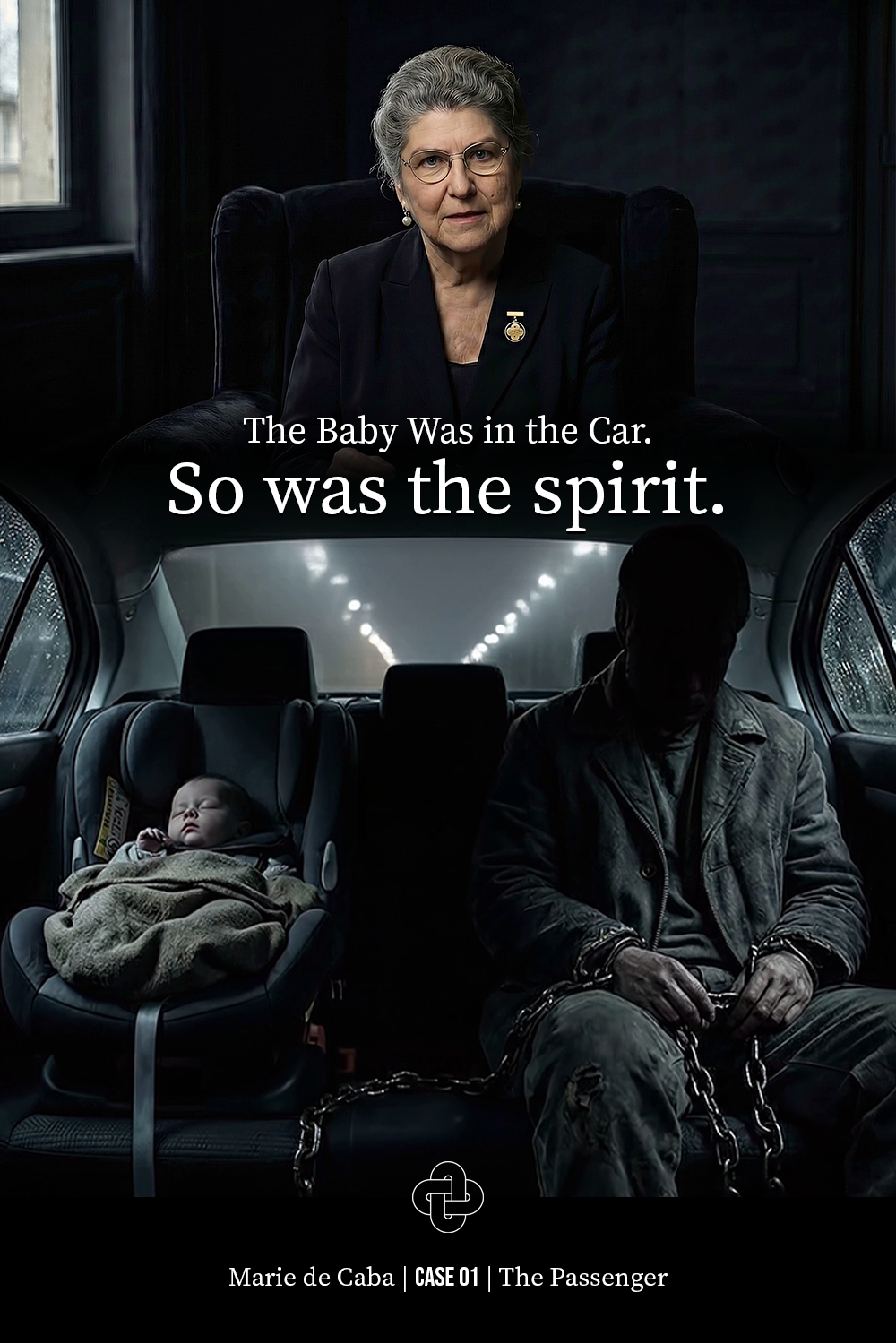
In this case, the spirit follows the family into the car. Not as a physical passenger. As an unseen presence. This explains why the family does not recognize what is happening at first. From the material point of view, they are alone. From the Spiritist point of view, they are accompanied.
The title The Passenger comes from this double reality. There is the passenger the family can see. And there is the passenger they cannot.
3. The Spirit Protector
The central meaning of the case is protection.
In The Spirits’ Book, Allan Kardec describes the role of protective spirits, sometimes called guardian angels or familiar spirits. Their mission is to guide, sustain, and assist those under their care, especially during trials, danger, or moral confusion.
Spiritism does not teach that spirits can cancel every danger or remove every trial from human life. But it does teach that protective spirits may intervene when such intervention is permitted and when it does not contradict the deeper moral course of a life.
This is the key to The Passenger. The spirit does not appear to explain itself. It does not offer comfort. It acts.
What first appears as a haunting becomes a rescue.
The family lives not because the danger disappeared, but because another will answered it.
4. Action Upon Matter
The moment in which the car does not fall introduces one of the most difficult aspects of the case: the action of spirits upon matter.
In Kardecian Spiritism, physical manifestations are explained through the interaction between the fluid of the spirit and the vital or animalized fluid present in embodied beings. This union allows a spirit to produce effects upon material objects, including sounds, movements, displacements, or resistance.
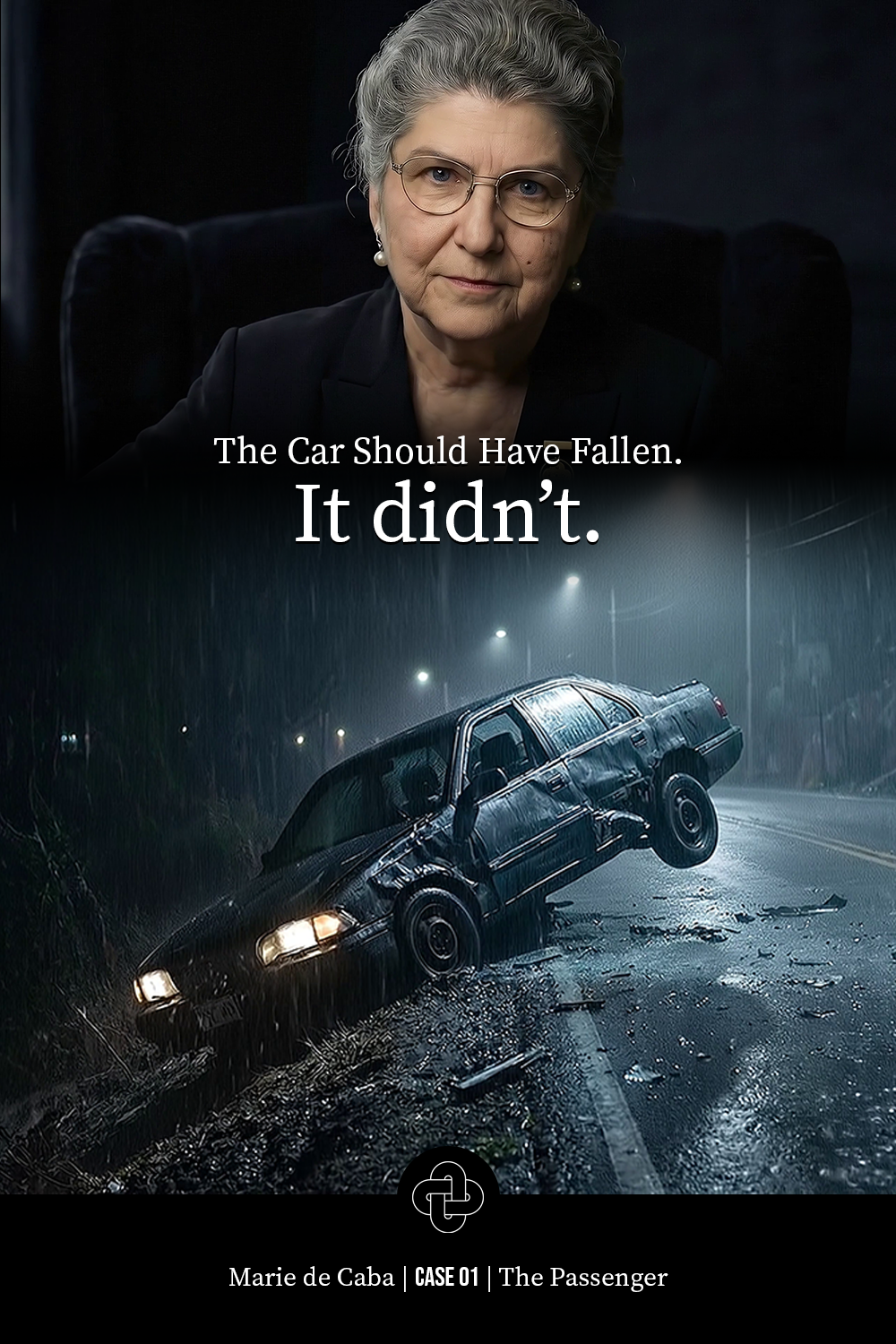
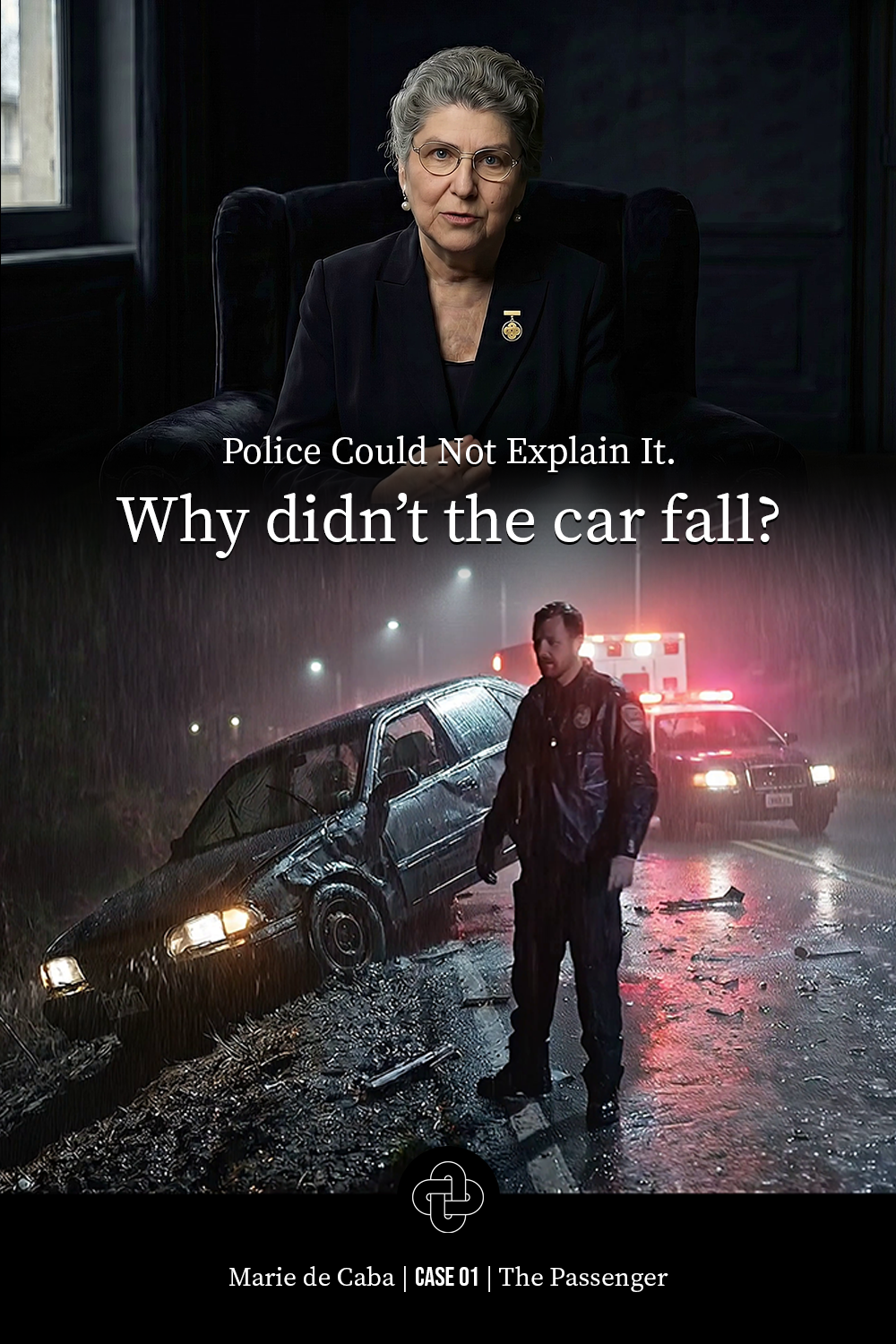
In the case, this principle offers a doctrinal way to interpret the impossible event: a vehicle that should have fallen, but did not. The chains are not merely symbolic. They become the visible form of restraint.
The spirit’s action is not random. It is directed. Its force has a purpose: to stop the car, hold the family, and prevent a death that was not meant to occur at that moment.
The result is not spectacle. It is intervention.
5. Why the Appearance Was Frightening
One of the most important lessons of the case is that fear can misread spiritual reality.
The living often judge a manifestation by its appearance. A dark figure, the sound of chains, or an oppressive atmosphere may immediately be interpreted as hostile.
But Spiritist doctrine asks for another criterion: moral intention.
What does the spirit do? What effect does its presence produce? Does it degrade, confuse, obsess, and harm? Or does it warn, protect, repair, and guide?
In The Passenger, the spirit’s appearance is severe, perhaps even terrifying. But the moral result of its action is life. The family survives.
The case therefore illustrates a central Spiritist principle: spirits should not be judged by the form they assume, but by the purpose and moral consequence of their acts.
Summary
The Passenger can be read as a case of spontaneous manifestation, spirit presence, protective intervention, and action upon matter.
The chains are first heard as fear.
Then they are understood as protection.
The spirit does not come to terrorize the living. It comes to prevent a death.
Through the lens of Allan Kardec’s Spiritism, the case shows that the relationship between the visible and invisible worlds is not governed by fear alone. It is governed by intention, moral law, and the unseen solidarity that may exist between spirits and the living.