Case 02
The Woman in the Fire
After the fire, she came to Marie with one question.
Was her husband still hers?
She wanted comfort. She wanted certainty. She wanted the dead to return with the answer her grief had already chosen. But the spirit who came through was not the one she expected.
Some spirits do not return to console us. They return to reveal what the living refused to see.
The Spiritist Doctrine Behind This Case
According to Allan Kardec’s Spiritist doctrine, the phenomena described in The Woman in the Fire can be understood through several principles found in the foundational works of Spiritism.
Explore the Spiritist principles behind Marie’s cases.
This case is not only about grief after a fire. It is about identity, hidden truth, moral progress, and the way the invisible world may intervene when a false bond keeps the living trapped.
The revelation is painful.
But in Spiritist terms, the question is not whether the revelation hurts.
The question is whether it serves moral liberation.
1. Spirit Identity and Evocation
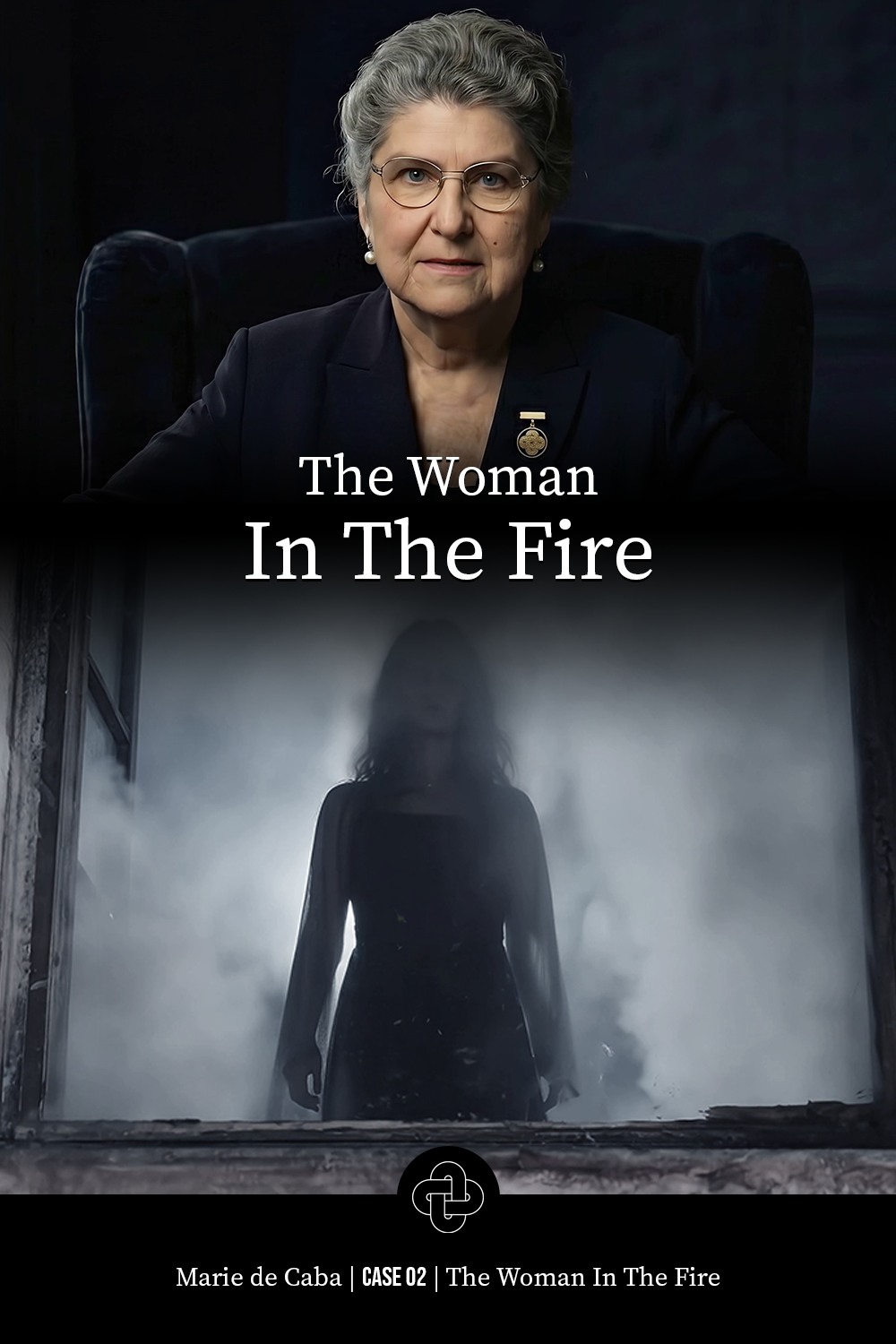
The woman comes to Marie seeking contact with one specific spirit: her husband. But in the session, another presence appears.
This difficulty belongs to one of the central problems of practical Spiritism: the identity of communicating spirits.
According to Kardec’s doctrine, spirits do not always respond exactly as the living expect. A spirit may refuse communication, be unable to communicate, or be replaced by another spirit whose connection to the situation is stronger, more urgent, or morally necessary.
In The Woman in the Fire, the spirit who appears is not merely an interruption. Her presence has meaning. She is connected to the hidden truth of the case. She has a direct moral interest in what has remained concealed.
The woman sought her husband. But the invisible world answered with the truth behind him.
2. The Role of Communicating Spirits
The appearance of the woman connected to the husband raises an important doctrinal question: why would a spirit reveal something so painful?
In Spiritist doctrine, spirits do not instantly become morally purified after death. They may still carry passions, jealousy, pride, attachment, pain, or the need to be recognized. Death does not erase character. It reveals it. The spirit who appears may still be connected to the emotional truth that was hidden in life. Her communication may contain human residue: grief, pride, jealousy, or the wound of having been denied.
But the moral effect of the communication is larger than the emotion of the spirit. A hidden fact comes to light. A false reality breaks. The living woman is forced to see what grief alone had prevented her from seeing.
According to Spiritist doctrine, revelations from the invisible world are not valuable because they satisfy curiosity. They are valuable when they serve a moral purpose. In this case, the revelation does not flatter the widow’s pain. It frees her from an illusion.
3. Trial, Truth, and Moral Progress
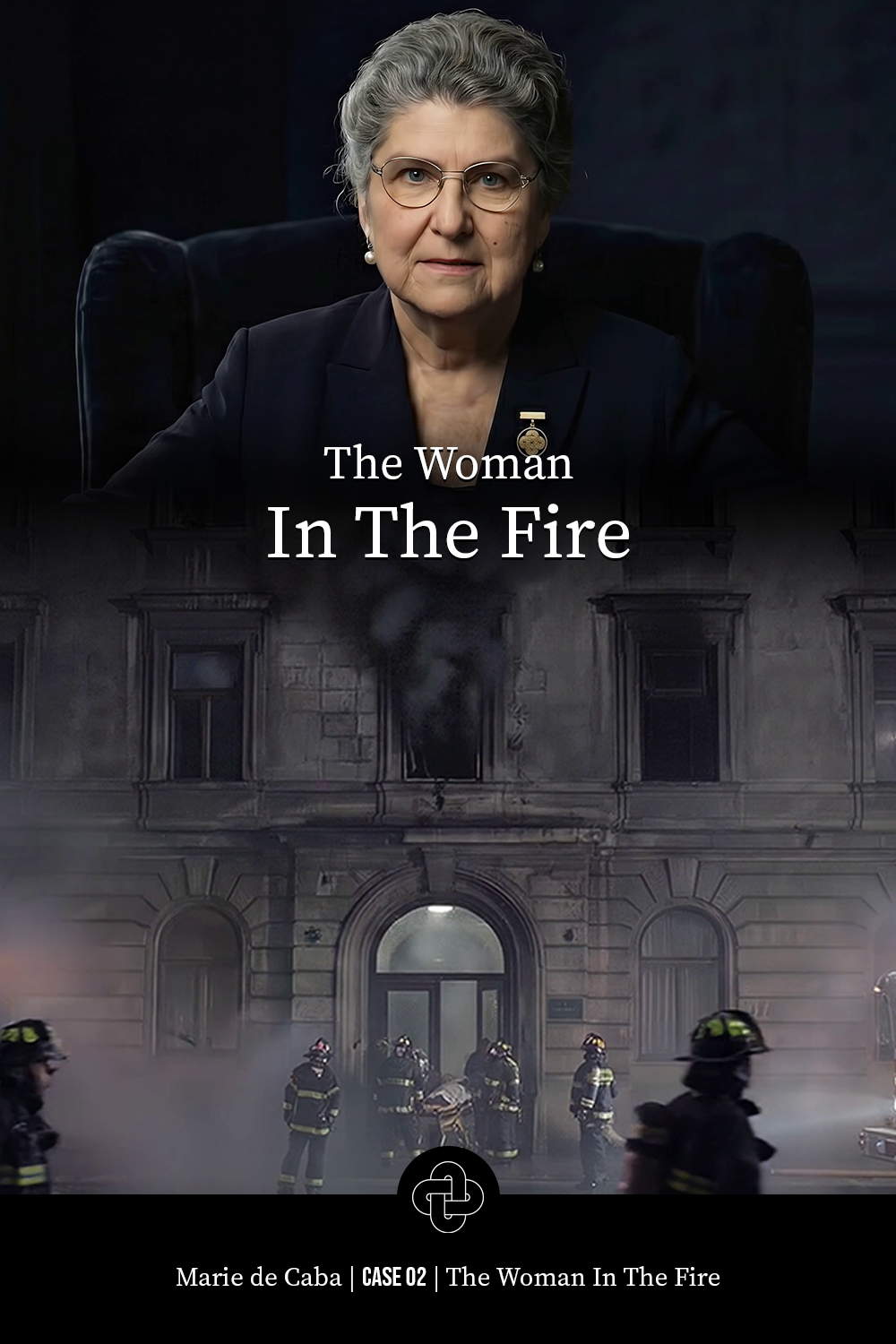
From the Spiritist point of view, the deepest meaning of the case is not the betrayal itself. It is the transformation produced by the truth.
Kardec’s doctrine teaches that trials in earthly life often serve to break illusions that hold the soul back. A painful event can become a turning point when it destroys a false attachment and opens a path toward moral freedom.
The woman had been living inside an image of her husband that was no longer whole. Her grief was real. But the bond she was clinging to was incomplete. The revelation does not erase her suffering. It changes its direction. Instead of remaining tied to a past built on concealment, she is given the possibility of choosing her own life again.
This is where free will becomes central. The spirit world may reveal. But the living must decide what to do with the revelation. The woman’s liberation does not come from being spared the truth. It comes from facing it.
4. Obsession, Fluidic Bonds, and Hidden Atmospheres
The case also suggests the existence of invisible bonds created by grief, secrecy, and emotional fixation.
In Kardecian Spiritism, moral and emotional states can create affinities between the living and the dead. A person overwhelmed by grief, despair, jealousy, or unresolved attachment may become more vulnerable to the influence of spirits vibrating in a similar state.
The hidden death, the concealed relationship, and the atmosphere of denial surrounding the fire create a field of unresolved truth. The spirit who appears had been made invisible in life. Then, in death, she remained tied to that invisibility.
The wife, meanwhile, remained tied to an illusion. Both were bound to what had not been spoken. The communication breaks that silence. Not gently. But decisively.
From a Spiritist perspective, this is why truth can sometimes arrive through a painful messenger. The purpose is not humiliation. The purpose is release.
5. Why the Revelation Was Not Cruel
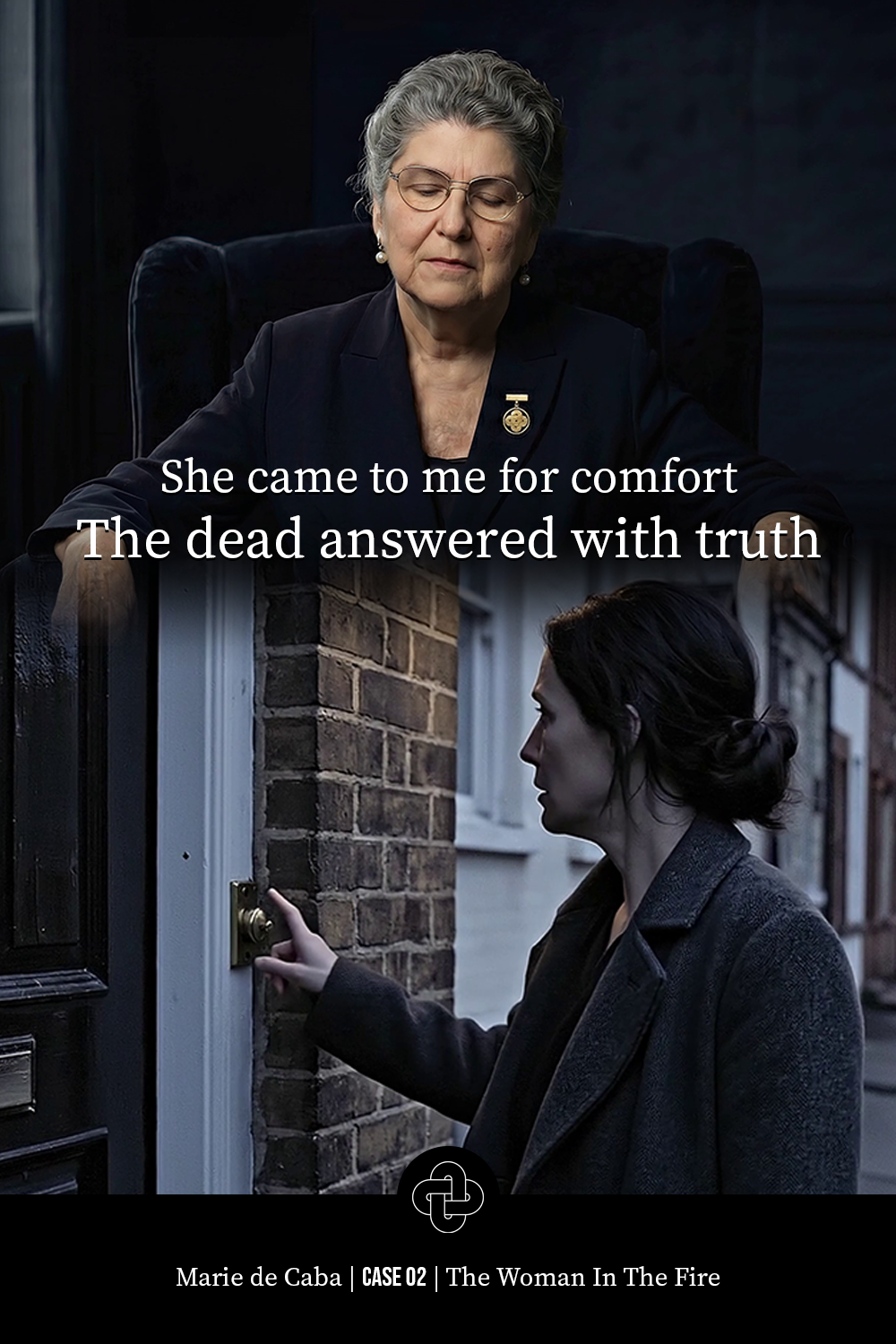
At first, the case may appear harsh. A grieving woman asks for comfort and receives a wound instead.
But Spiritist doctrine does not measure spiritual help only by whether it feels consoling in the moment. It asks whether the intervention leads to moral clarity, freedom, and progress. There are truths that console. And there are truths that liberate.
In The Woman in the Fire, the spirit does not return to preserve the widow’s illusion. The spirit returns because the illusion has become a prison. The revelation hurts because the lie had become familiar. But once the hidden truth is spoken, the woman is no longer bound to a dead image of her marriage. She can grieve what was real, release what was false, and continue her life without serving a memory that had deceived her.
This is the moral center of the case. The invisible world does not always give the answer the living ask for. Sometimes it gives the answer the soul needs.
Summary
The Woman in the Fire can be read as a case of unexpected spirit communication, difficulty of spirit identity, hidden truth, moral trial, and liberation from illusion.
The woman asks for her husband. Another spirit answers.
What first appears to be cruelty becomes, through the lens of Allan Kardec’s Spiritism, a painful act of moral revelation.
The case shows that the relationship between the living and the dead is not governed only by comfort. It is also governed by truth, progress, and the breaking of false bonds.
The dead do not always return to soothe the living. Sometimes they return to free them.