Case 06
The Children Had Left
A woman came to Marie de Caba with trembling keys.
The village said the house could not be sold because two dead children still remained inside it. The woman believed they were stopping every buyer, and she asked Marie to guide them out.
But when Marie entered the house, she found no children, no grief, and no claim upon the inheritance. The house was not empty, but the spirit inside was not who the village believed.
The Spiritist Doctrine Behind This Case
According to Allan Kardec’s Spiritist doctrine, the phenomena described in The Children Had Left can be understood through several principles: haunted places, popular superstition, the condition of children after death, material attachment, remorse, and the moral role of mediumship.
Explore the Spiritist principles behind Marie’s cases.
This case is not only about a house people feared.
It is about what happens when grief becomes rumor, when guilt becomes possession, and when love mistakes property for reparation.
1. Haunted Places and Popular Superstition
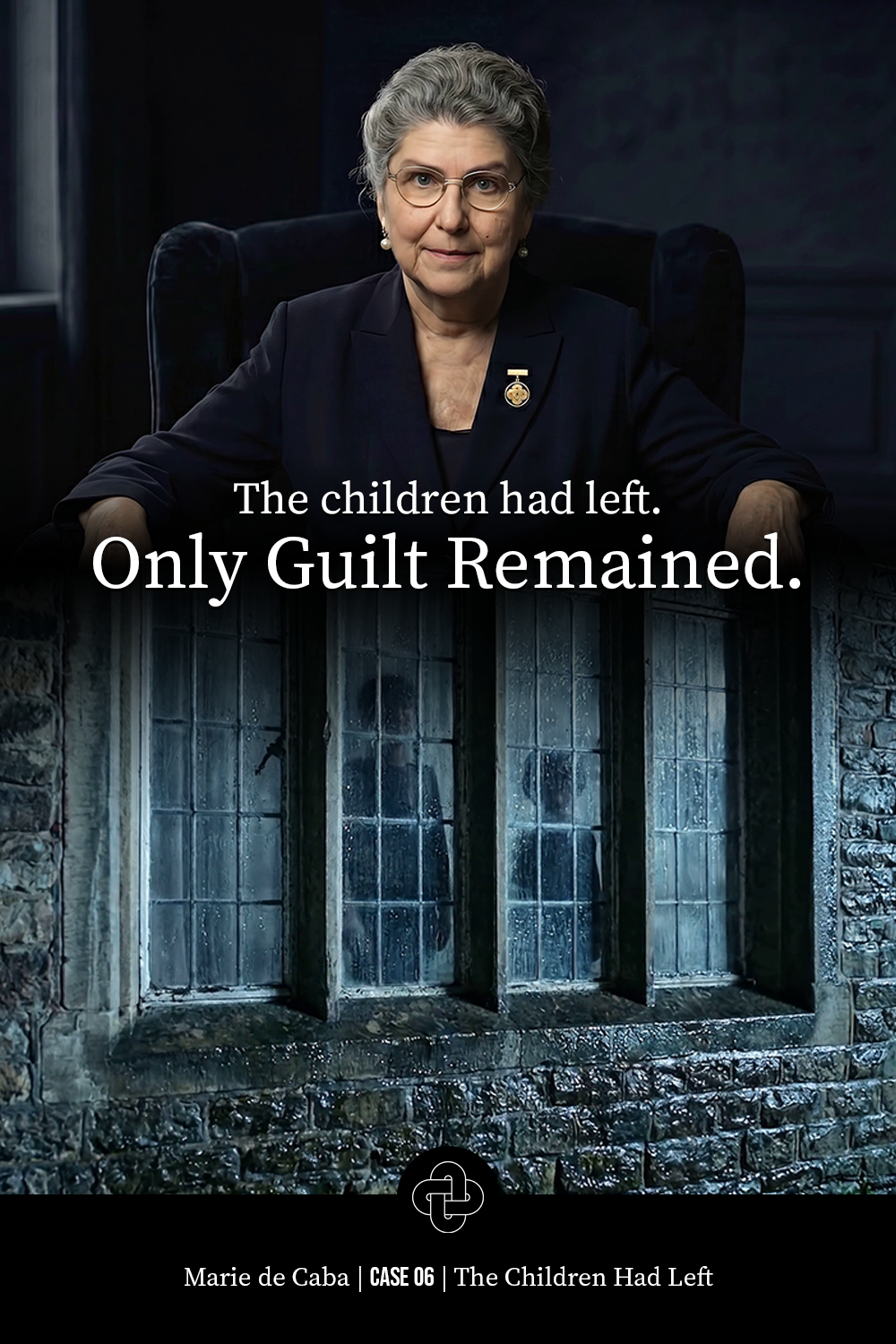
The village believed the house was haunted by the dead children.
This belief grew from scattered accounts: faces behind windows, footsteps upstairs, whispers in empty rooms, buyers feeling watched. But the stories did not agree with one another.
Fear had made itself a witness.
In The Mediums’ Book, Allan Kardec treats haunted places with caution. Spirits may become attached to certain places, but not because walls possess spiritual power. Such attachment depends on the moral condition of the spirit, its memories, sympathies, desires, suffering, or the expiatory circumstances that still bind it to earthly concerns.
Spiritist doctrine also warns against accepting every strange event as spiritual without discernment. Popular fear often distorts perception. A vague sound becomes a footstep. A shadow becomes a face. A coincidence becomes a judgment.
The village was not evil. It was afraid.
And when fear is repeated long enough, it begins to sound like proof.
2. The Children Who Were Not There
The first true sign Marie receives is not an apparition. It is absence.
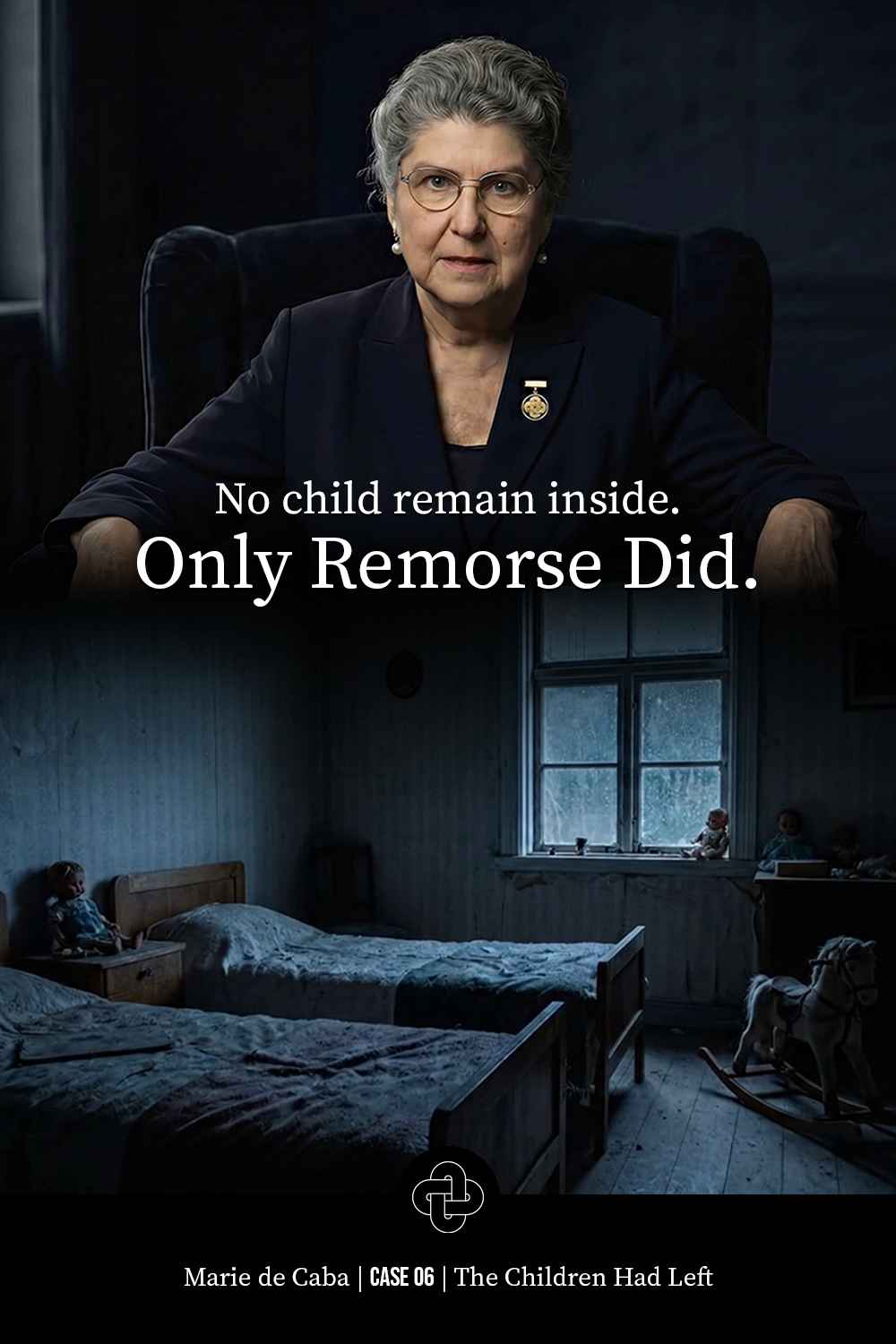
In the children’s room, there are two beds, two pillows, and toys beneath dust. But there are no child spirits. No grief clinging to the walls. No spiritual claim upon the house.
This is consistent with Spiritist teaching on the death of children. In The Spirits’ Book, Kardec explains that a child’s soul is not newly created, nor is it permanently fixed in the condition of childhood. The spirit has lived before. Childhood belongs to the temporary conditions of incarnation.
When a child dies young, the spirit is released from the material envelope and returns to the spiritual state. It does not remain spiritually trapped as a child in the place where the body died.
The children had died in that house. But they had not remained there. Their death did not make the house theirs. Their childhood did not imprison them inside the room.
The village saw children because it needed children to explain the sorrow of the place.
Marie found no children because the truth was deeper.
3. The Father Bound to Matter
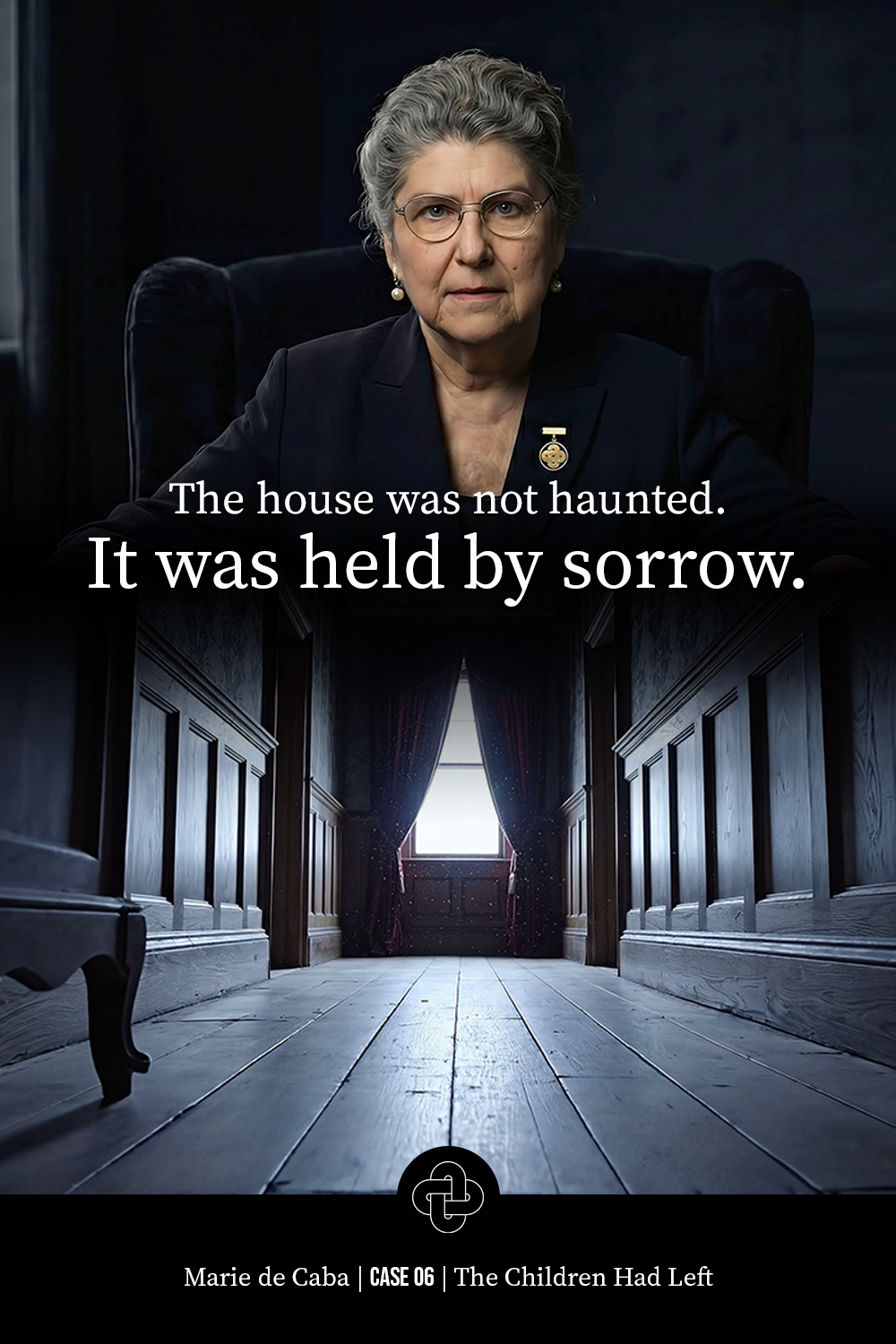
The spirit in the house is the father. He is not violent. He is not trying to terrify buyers. He is not guarding the house out of simple greed.
He is fixed to one idea: The house must remain theirs.
In Spiritist doctrine, this is a form of material attachment. The spirit remains bound to what it still loves wrongly, fears losing, or refuses to understand. The perispirit, described by Kardec as the semi-material envelope of the spirit, remains more or less dense according to the spirit’s moral condition and attachment to earthly life.
A spirit overly absorbed in material concerns may remain close to the Earth, unable to rise toward freer states of consciousness.
The father’s attachment is not merely to property. It is to guilt.
The house had become the apology he thought he could still give. He had survived his children. Then he had died without forgiving himself. His remorse remained fixed to the only material thing he believed could still belong to them.
He was not guarding property. He was guarding the apology he thought the house could give.
4. Remorse as Punishment
In Heaven and Hell, Kardec presents future suffering not as arbitrary revenge, but as the moral consequence of the spirit’s own imperfections, choices, and persistent errors.
The father is not imprisoned by God. He is imprisoned by the thought he will not release.
He confuses guilt with fidelity. He confuses inheritance with love. He believes that if the house remains untouched, something of his children will be repaired.
But remorse cannot be healed by possession. A document cannot restore what grief has misunderstood. A house cannot replace moral peace.
The father’s suffering comes from within him. His own conscience repeats the same sentence. His own attachment keeps him near the table, the will, the walls, and the rooms his children no longer need.
The children are free. The father is not.
5. The Medium’s Role: Moral Clarification, Not Spectacle
Marie does not perform an exorcism. She does not fight the house. She does not command the children to leave. She does not turn suffering into spectacle. Her work is moral clarification.
In The Mediums’ Book, Kardec describes the value of serious and charitable communication with suffering or imperfect spirits. Such spirits may be helped through moral influence, prayer, counsel, and the awakening of repentance.
The medium’s task is not to humiliate the spirit. It is to illuminate the error that keeps the spirit bound.
Marie’s authority does not come from force. It comes from truth.
She tells the woman that the children are not there.
Then she helps the father understand what he has mistaken. The house was never the children’s inheritance. It was his unresolved grief. His children were not waiting for rooms. They were waiting for him to stop holding them inside his guilt.
6. What the Dead Can Keep
The final law of the case is simple. The dead do not keep houses. They keep what they have become.
Spiritist doctrine places moral progress above material possession. The things of Earth remain on Earth. What follows the spirit is conscience, affection, responsibility, virtue, intelligence, and the consequences of what it has loved or refused to repair.
The father wanted to give his children a house. But the children did not need walls.
They did not need papers.
They did not need ownership.
They needed a father free enough to love them without chains.
Marie did not take the house from him. She helped him understand that it had never been his power to give.
Summary
The Children Had Left can be read as a case of popular superstition, haunted places, child death, material attachment, remorse after death, and moral mediumship.
Through the lens of Allan Kardec’s Spiritism, the case shows that not every haunted place is haunted by the spirit people imagine.
The village believed the children were trapped. Marie found that they were free. The true captive was the father, held not by the house, but by guilt. He did not need to defend the inheritance. He needed to stop confusing love with possession.
Marie did not guide children out. She released a father from his guilt. Only then could he find his children again.
The dead do not need walls. They need love without chains.