Case 07
She Died Alone
She had only one fear.
Not illness.
Not pain.
Not death itself.
She was afraid of dying alone.
The Spiritist Doctrine Behind This Case
According to Allan Kardec’s Spiritist doctrine, the events described in She Died Alone can be understood through several principles: the choice or acceptance of trials before incarnation, the moral purpose of suffering, fear as a spiritual test, the distinction between physical solitude and spiritual abandonment, and the passage from bodily life to spiritual life.
Explore the Spiritist principles behind Marie’s cases.
This case is not only about a woman left in an empty room.
It is about the difference between being alone before human eyes and being abandoned before God.
The woman feared one thing above all others: to die without anyone near her. Yet the circumstances of her final hour led her precisely into that fear.
From a Spiritist perspective, this does not mean cruelty, punishment, or divine indifference.
It suggests a trial of the soul.
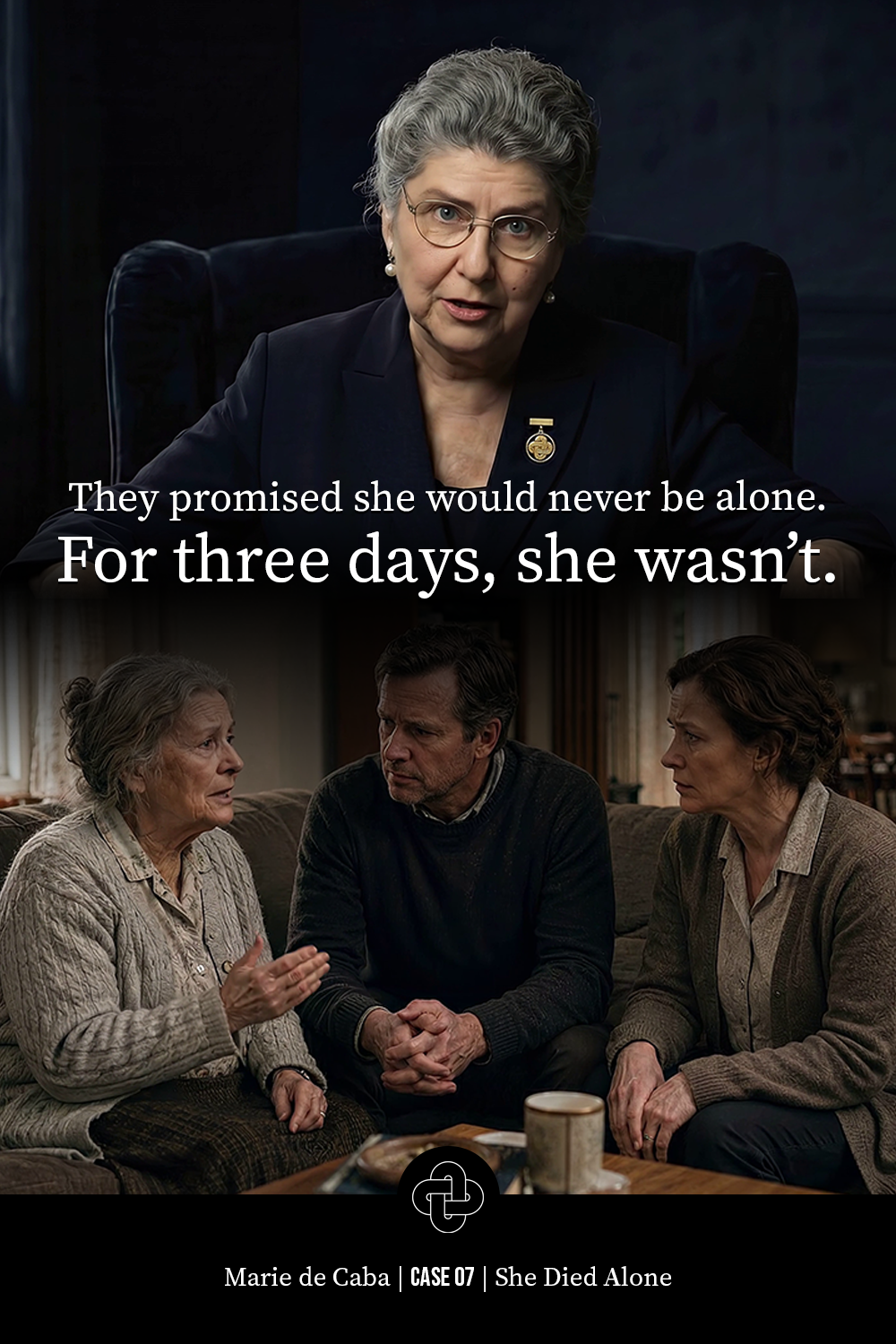
1. The Fear Chosen Before Birth
In The Spirits’ Book, Allan Kardec teaches that the soul may choose, or at least accept, certain trials before incarnation. These trials are not always pleasant, and they are not always understood during earthly life. Their purpose is moral progress.
A spirit does not choose suffering for suffering’s sake. It chooses the conditions through which pride may soften, courage may awaken, attachment may loosen, or trust may be learned.
In She Died Alone, the woman’s deepest fear is not accidental. It becomes the central point of the case because it reveals the exact place where the soul is being tested.
She does not fear death as an abstract doctrine. She fears the moment of separation. She fears the empty room. She fears that no one will answer.
The trial is not simply that she dies. The trial is that she must cross death without the human reassurance she believed she needed.
2. Physical Solitude and Spiritual Abandonment
The case turns on a painful distinction.
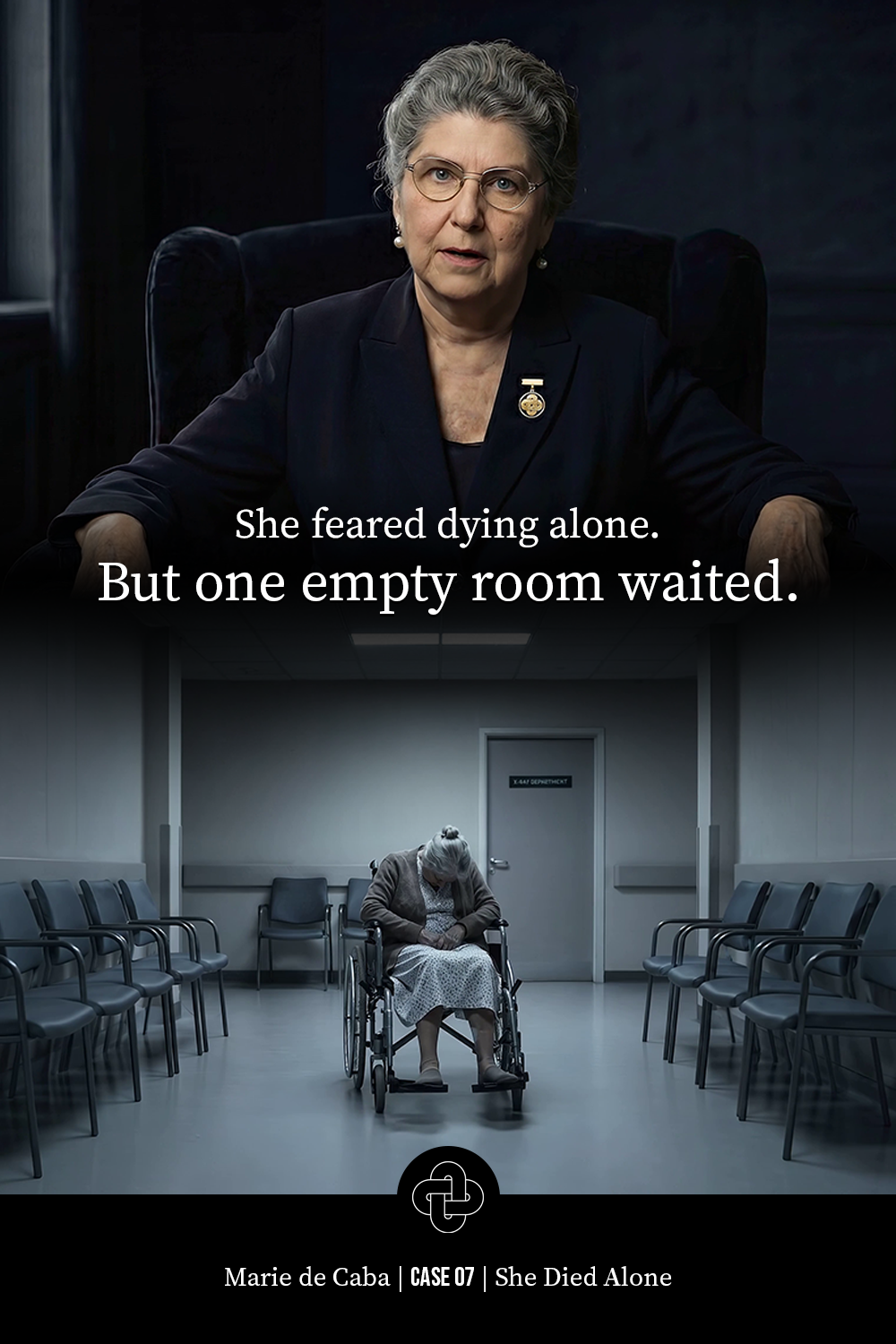
To the human eye, the woman dies alone. No nurse is beside her. No family member holds her hand. No witness sees the final breath.
But Spiritist doctrine does not equate physical solitude with spiritual abandonment. The visible world is not the whole of presence. Spirits who love, protect, guide, or assist may be near even when no incarnate person is present.
This is why the case must be read carefully. The tragedy is real on the human level. The woman’s fear is real. The empty room is real.
But the spiritual meaning is not that she was forgotten.
A soul may be unseen by the living and still surrounded by the invisible.
The trial was not abandonment. It was the loss of the visible sign of company.
3. The Family’s Promise: “You Will Not Die Alone”
The family’s promise is morally important. They do not want her deepest fear to become true. They know she is afraid of dying alone, and they try to surround her with presence, vigilance, and love. Their commitment is sincere: someone will always be near. Someone will answer. Someone will remain.
Spiritist doctrine does not diminish the value of this care. On the contrary, the effort of the family belongs to charity. To accompany the dying, to comfort fear, and to remain close in the final hour are acts of love. The family does what human love can do.
But the case reveals the limit of human control.
No family, however devoted, can fully govern the exact circumstances of death. The hour of departure does not always obey our arrangements, our promises, or even our tenderness.
This is why the final solitude is so painful. It is not the result of indifference. It is the collapse of a promise made with love, but placed before a mystery greater than human will.
The family did not abandon her. They simply could not hold back the conditions of the trial her soul had come to face.
4. The Empty Room as Spiritual Trial
The empty room is the center of the case. It is not merely a place. It is the material form of the woman’s fear.
In Spiritist doctrine, earthly life places the spirit before the conditions necessary for its progress. Sometimes the soul must confront precisely what it has spent a lifetime avoiding. Not because God seeks to break it, but because the spirit cannot be freed from a fear it never faces.
The woman had been protected from solitude. She had been reassured against it. She had arranged her final days around the hope that someone would be near.
Yet at the decisive moment, she is brought to the point where no visible hand remains.
This is the severity of the trial. The empty room asks the soul a question: Can you trust when no one is visible?
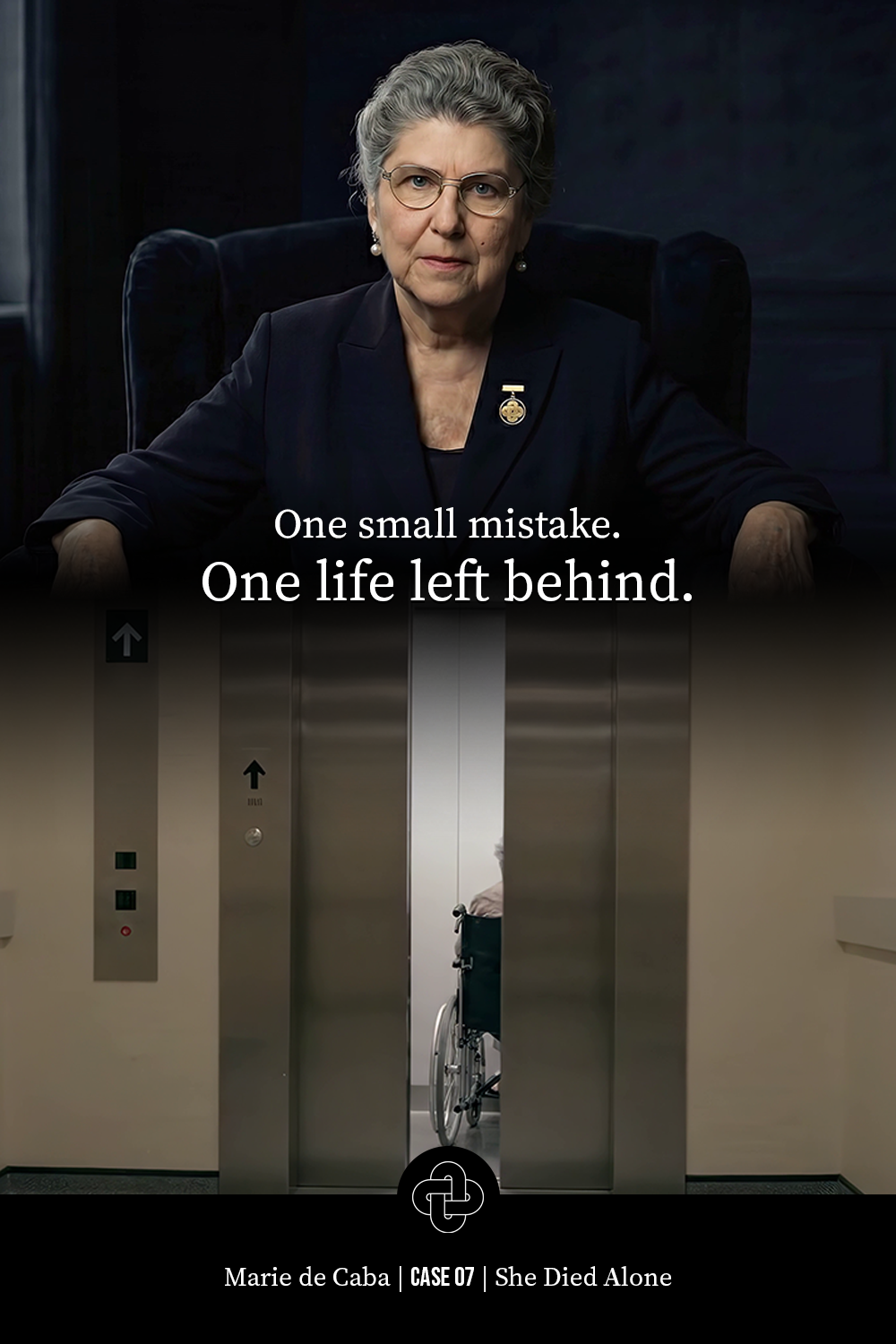
5. Death as Passage, Not Disappearance
Spiritist doctrine sees death not as annihilation, but as the return of the soul to spiritual life. The body remains, but the spirit continues. The fear of dying alone therefore belongs largely to the incarnate condition, where presence is measured by bodies, voices, faces, and touch.
At the moment of death, this measure changes.
The woman believed that if no one stood beside the bed, she would cross alone. But once the soul begins to separate from the body, the conditions of perception change. The world of spirits becomes nearer, and the signs of earthly company lose their absolute importance.
The case’s sorrow remains. But its meaning deepens. She did not vanish into emptiness. She passed through it.
6. What Marie Understands
Marie’s role in the case is not to accuse anyone. She does not blame the nurses. She does not blame the hospital. She does not reduce the woman’s death to negligence, superstition, or accident.
Marie reads the event spiritually. She understands that the woman’s last fear and her final circumstance are connected. She sees in the empty floor not only a mystery, but a trial reaching its conclusion.
The woman had not been punished by being left alone. She had been brought to the threshold of the lesson her soul had come to face.
The room was empty. But the passage was not.
Summary
She Died Alone can be read as a case of spiritual trial, fear, solitude, death, and the invisible assistance that may surround the soul at the moment of passage.
Through the lens of Allan Kardec’s Spiritism, the case shows that earthly suffering is not always random, and that the deepest fears of a life may reveal the lessons a spirit has come to confront.
The woman feared dying alone. And humanly, that is what happened.
But Spiritist doctrine asks us to look beyond the visible room. Physical solitude is not the same as spiritual abandonment. The absence of witnesses does not mean the absence of care. The silence of the corridor does not prove that the soul was forgotten.
She died alone before the world.
But not necessarily before the invisible.
The empty room was not the end of love. It was the final test of trust.